


Page 33 - 南京医科大学自然版
P. 33
第46卷第6期                 韩汶书,申     敏,钱 莉. 肝窦内皮细胞:慢性肝病进展的“帮凶”?[J].
                  2026年6月                      南京医科大学学报(自然科学版),2026,46(6):809-819                      ·815  ·


                                                Denatured collagen,pathogens,
                                                                                                   HC
                                                and other macromolecules
                             Drugs,plasma proteins,
                                                SR
                             lipoproteins,small
                    Normal                                                              HSC(quiet)
                             chylomicrons                                         +
                                                                Endocytic vesicle  CD4 T
                                                                                           VEGF,NO HGF,Wnt2
                                                                  MHCⅡ        PD⁃1/PD⁃L1
                                  Fenestrated


                                       HC

                                                                 ECM
                                                                                    HC
                                                                           HC
                                                TGF⁃β,PDGF
                                                                     LSEC
                                                                                         Inflammation
                                                                                                     MKL1
                     Liver injury                            HSC(active)                             STAT3
                                                                                                          TWIST1
                                                                                Fatty degeneration  TWIST1 promoter
                                                                         LECT2
                                                CXCR4          TGF⁃β,FIB,
                                                                        Tie2  Tie1       Senescent
                                                      SDF⁃1    VAP⁃1
                                Capillarized                                                               EndMT
                                                                                                ColⅠα1,FN1,Vimentin
                                                                                  IL⁃6,IL⁃1β,TNF⁃α
                                       HC
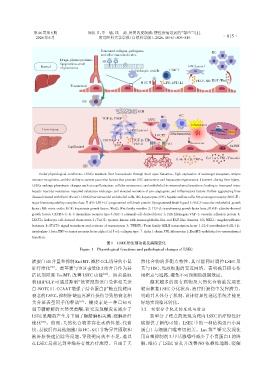
                   Under physiological conditions,LSECs maintain liver homeostasis through their open fenestrae,high expression of scavenger receptors,unique
                immune recognition,and the ability to secrete paracrine factors that promote HSC quiescence and hepatocyte regeneration. However,during liver injury,
                LSECs undergo phenotypic changes such as capillarization,cellular senescence,and endothelial⁃to⁃mesenchymal transition,leading to increased intra⁃
                hepatic vascular resistance,impaired substance exchange,and elevated secretion of pro⁃angiogenic and inflammatory factors,further aggravating liver
                disease(created with BioGDP.com). LSEC:liver sinusoidal endothelial cells;HC:hepatocytes;HSC:hepatic stellate cells;SR:scavenger receptor;MHCⅡ:
                major histocompatibility complex class Ⅱ;PD⁃1/PD⁃L1:programmed cell death protein 1/programmed death⁃ligand 1;VEGF:vascular endothelial growth
                factor;NO:nitric oxide;HGF:hepatocyte growth factor;Wnt2:Wnt family member 2;TGF⁃β:transforming growth factor beta;PDGF:platelet⁃derived
                growth factor;CXCR4:C⁃X⁃C chemokine receptor type 4;SDF⁃1:stromal cell⁃derived factor 1;FIB:fibrinogen;VAP⁃1:vascular adhesion protein 1;
                LECT2:leukocyte cell⁃derived chemotaxin 2;Tie1/2:tyrosine kinase with immunoglobulin⁃like and EGF⁃like domains 1/2;MKL1:megakaryoblastic
                leukemia 1;STAT3:signal transducer and activator of transcription 3;TWIST1:Twist family bHLH transcription factor 1;IL⁃6:interleukin⁃6;IL⁃1β:
                interleukin⁃1 beta;TNF⁃α:tumor necrosis factor alpha;ColⅠα1:collagen type Ⅰ alpha 1 chain;FN1:fibronectin 1;EndMT:endothelial⁃to⁃mesenchymal
                transition.
                                                  图1   LSEC的生理功能及病理变化
                                      Figure 1 Physiological functions and pathological changes of LSEC


                族蛋白B1含量和抑制EndMT,减轻CCl4诱导的小鼠                       然化合物的多靶点特性,其可能同时调控 LSEC 及
                肝纤维化    [59] 。黄芩素与TGF⁃β受体2结合并作为其                  其与 HSC、免疫细胞的交互网络。需明确其核心作
                拮抗剂阻断 EndMT,改善 LSEC 功能          [60] 。地黄提取        用靶点与通路,避免不可预测的级联效应。
                物RRPGLY 可通过抑制“低密度脂蛋白受体相关蛋                             越来越多的现有药物及天然化合物被发现在
                白⁃NOTCH1⁃CCAAT增强子结合蛋白β”轴直接靶向                      靶向恢复LSEC分化状态,治疗肝损伤中发挥潜力,
                衰老的LSEC,抑制肝缺血再灌注损伤导致的衰老相                          明确其具体分子机制,设计特异性递送系统才能更
                关分泌表型因子的释放           [61] 。槲皮素是一种已知可              好地实现临床转化。
                调节糖酵解的天然类黄酮,研究发现槲皮素减少了                            3.2  新型分子靶点的发现与验证
                LSEC乳酸的产生并下调了糖酵解相关酶,缓解肝纤                              新型分子靶点的发现为靶向LSEC 治疗慢性肝
                维化  [62] 。然而,天然化合物常存在水溶性差、代谢                      病提供了新的可能。LSEC 中的一种结构蛋白小窝
                快、易被肝内其他细胞(如HC、KC)非特异性摄取和                         蛋白 1 与细胞自噬密切相关。Luo 等             [63] 研究发现使
                被肝脏快速清除等问题,导致靶向效率不足,难以                            用自噬抑制剂3⁃甲基腺嘌呤减少了小窝蛋白1的降
                在LSEC局部达到并维持有效治疗浓度。且由于天                           解,维持了 LSEC 窗孔并改善 NO 依赖性通路,缓解

