


Page 148 - 南京医科大学自然版
P. 148
第46卷第10期
               ·1578 ·                           南 京    医 科 大 学 学         报                        2026年10月


                                      Metabolic reprogramming
                                                                               Microenvironment remodeling
                                SLC1A5
                                                 Ammonia
                      Glutamine
                                                                                     IFN⁃γ
                                          GLS1                                                   +
                                                                                              CD8 T cells
                                                                           Treg
                                                                                           CAF
                                                                                Reduced
                                    Tumor cell proliferation                    glutamine


                                                               Immune evasion


                                                            M2⁃TAM              TAM


                                                                        AMPK
                                                            STAT6
                                                                        activation
                                                            phosphorylation
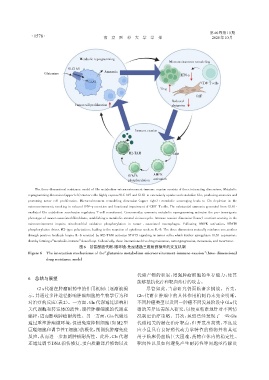
                 The three⁃dimensional resistance model of Gln metabolism⁃microenvironment⁃immune evasion consists of three interacting dimensions. Metabolic
              reprogramming dimension(upper left):tumor cells highly express SLC1A5 and GLS1 to extensively uptake and catabolize Gln,producing ammonia and
              promoting tumor cell proliferation. Microenvironment remodeling dimension(upper right):metabolic scavenging leads to Gln depletion in the
                                                                         +
              microenvironment,resulting in reduced IFN⁃γ secretion and functional impairment of CD8 T cells. The substantial ammonia generated from GLS1⁃
              mediated Gln catabolism accelerates regulatory T cell recruitment. Concurrently,ammonia metabolic reprogramming activates the pro ⁃ tumorigenic
              phenotype of cancer⁃associated fibroblasts,establishing a metabolic⁃stromal vicious cycle. Immune evasion dimension(lower):nutrient scarcity in the
              microenvironment impairs mitochondrial oxidative phosphorylation in tumor ⁃ associated macrophages. Following AMPK activation,STAT6
              phosphorylation drives M2⁃type polarization,leading to the secretion of cytokines such as IL⁃6. The three dimensions mutually reinforce one another
              through positive feedback loops:IL⁃6 secreted by M2⁃TAM activates STAT3 signaling in tumor cells,which further upregulates GLS1 expression,
              thereby forming a“metabolic⁃immune”closed loop. Collectively,these interactions drive drug resistance,tumor progression,metastasis,and recurrence.
                                      图6 谷氨酰胺代谢⁃微环境⁃免疫逃逸三维耐药模型的交互机制
              Figure 6  The interaction mechanisms of the“glutamine metabolism⁃microenvironment⁃immune evasion”three⁃dimensional
                      drug resistance model


                                                                代谢产物的积累,增强肿瘤细胞的生存能力,使其
              6  总结与展望
                                                                能够抵抗化疗和靶向治疗的攻击。
                  Gln代谢在肿瘤耐药中的作用机制已逐渐被揭                              尽管如此,当前研究仍面临诸多挑战。首先,
              示,其通过多种途径影响肿瘤细胞的生物学行为和                            Gln 代谢在肿瘤中的具体作用机制尚未完全明晰,
              对治疗的反应(表2)。一方面,Gln代谢通过影响相                         不同肿瘤类型以及同一肿瘤不同发展阶段中Gln代
              关代谢酶和转运体的活性,调控肿瘤细胞的代谢重                            谢的差异还需深入研究,以便更精准地针对不同情
              编程,进而影响肿瘤耐药性。另一方面,Gln代谢还                          况制定治疗策略。其次,虽然已经发现了一些 Gln
              通过重塑肿瘤微环境,促进免疫抑制细胞(如M2型                           代谢相关的潜在治疗靶点,但开发出高效、不良反
              巨噬细胞和调节性T细胞)的极化,削弱抗肿瘤免疫                           应小且具有良好药代动力学特性的药物并将其运
              反应,从而进一步加剧肿瘤耐药性。此外,Gln代谢                          用于临床仍面临巨大困难,药物在体内的稳定性、
              还通过调节DNA损伤修复、蛋白质翻译后修饰以及                           靶向性以及如何避免产生耐药性等问题亟待解决

