


Page 147 - 南京医科大学自然版
P. 147
第46卷第10期                 陈奕文,张静静,张雄飞. 谷氨酰胺代谢和肿瘤耐药机制研究进展[J].
                 2026年10月                    南京医科大学学报(自然科学版),2026,46(10):1567-1583                     ·1577 ·


                        Level 4:           Level 3:                                                Level 1:
                     Microenvironment     Antioxidant                          Gln            Transporter compensation
                        coupling            system    Cystine           SLC1A5
                                                                                     SLC38A2
                                          compensation      SLC7A11                         Gln
                    (CAF⁃tumor cell)
                                        (GSH synthesis)
                                                                           Gln               Upregulated SLC38A2
                             CAF                         Cystine
                                                                                        Gln
                     Glu
                      +                                  Cysteine
                                                                            Gln
                   Ammonia
                          GS
                                           Cystine uptake bypasses  GSH
                                                                           GLS1    CB⁃839
                            Upregulated    Glu for GSH
                                                           Glu                  PPP sustains redox  Glucose
                                                                            Glu
                                                                                homeostasis
                                                                                                  Glycolysis
                                 Gln                                       PPP   NADPH
                                           Gln            α⁃KG
                 CAF⁃secreted Gln supports     Upregulates                                     Pyruvate
                 tumor TCA and nucleotides  SLC1A5                  TCA                Lactate
                                                                                       pyruvate
                                         Fatty acids  Acetyl⁃CoA    cycle
                                                                                        cycle  Lactate
                                                 FAO
                     TAMs also provide                                                     Glycolysis/Lactate
                     external support                      Level 2:Metabolic enzyme reprogramming  indirectly replenishes TCA
                                                                  (GLS1 inhibition)
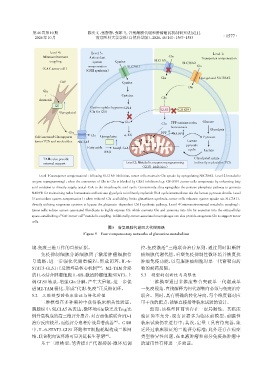
                   Level 1(transporter compensation):following SLC1A5 inhibition,tumor cells maintain Gln uptake by upregulating SLC38A2. Level 2(metabolic
                enzyme reprogramming):when the conversion of Gln to Glu is blocked by GLS1 inhibitors(e.g. CB⁃839),tumor cells compensate by enhancing fatty
                acid oxidation to directly supply acetyl⁃CoA to the tricarboxylic acid cycle. Concurrently,they upregulate the pentose phosphate pathway to generate
                NADPH for maintaining redox homeostasis and activate glycolysis to indirectly replenish TCA cycle intermediates via the lactate⁃pyruvate shuttle. Level
                3(antioxidant system compensation):when reduced Glu availability limits glutathione synthesis,tumor cells enhance cystine uptake via SLC7A11,
                directly utilizing exogenous cysteine to bypass the glutamate⁃dependent GSH synthesis pathway. Level 4(microenvironmental metabolic coupling):
                tumor cells induce cancer⁃associated fibroblasts to highly express GS,which converts Glu and ammonia into Gln for secretion into the extracellular
                space,establishing a“CAF⁃tumor cell”metabolic coupling. Additionally,tumor⁃associated macrophages can also provide exogenous Gln to support tumor
                cells.
                                                   图5 谷氨酰胺代谢四大代偿网络
                                       Figure 5 Four compensatory networks of glutamine metabolism


                境⁃免疫三维互作的直接证据。                                    控⁃免疫激活”三维联合治疗原则,通过同时阻断肿
                    免疫抑制细胞分泌细胞因子激活肿瘤细胞信                           瘤细胞代谢代偿、重塑免疫抑制性微环境并恢复抗
                号通路,进一步强化代谢重编程,形成闭环,IL⁃6⁃                         肿瘤免疫功能,以克服肿瘤细胞对单一代谢靶向药
                STAT3⁃GLS1正反馈环是核心机制 。M2⁃TAM分泌                     物的耐药局限。
                                             [60]
                的IL⁃6结合肿瘤细胞IL⁃6R,激活肿瘤细胞STAT3,上                    5.3  模型的创新性与局限性
                调GLS1转录,增强Gln分解,产生大量氨,进一步促                            三维模型通过多维度整合突破单一代谢或单
                进M2⁃TAM极化,形成“代谢⁃免疫”正反馈闭环。                         一免疫视角,直接解释为何代谢靶向必须与免疫治疗

                5.2  三维模型的临床验证与转化价值                               联合。同时,具有明确的转化导向,每个维度都对应
                    三维模型在多种癌种中获得临床相关性验证。                          可干预的靶点,能够直接指导临床试验的设计。
                胰腺癌中,SLC1A5高表达、微环境Gln缺乏及Treg比                         然而,该模型目前也存在一定局限性。其临床

                例升高构成的高三维评分患者,对吉西他滨联合PD⁃1                         验证尚不充分,现有证据多为临床前模型,前瞻性
                                                     [41]
                治疗反应较差,而低评分患者疗效显著改善 。GBM                          临床试验仍在进行中;其次,定量工具有待完善,缺
                中,IL⁃6⁃STAT3⁃GLS1环路和T细胞耗竭构成三维网                    乏经过临床验证的三维评分标准;此外还存在癌症
                络,联合靶向该环路可显著延长生存期 。                               类型特异性问题,在血液肿瘤和部分免疫热肿瘤中
                                                 [60]
                    基于三维模型,笔者提出“代谢抑制⁃微环境调                         的适用性有待进一步验证。

