


Page 16 - 南京医科大学自然版
P. 16
第46卷第10期
               ·1446 ·                           南 京    医 科 大 学 学         报                        2026年10月


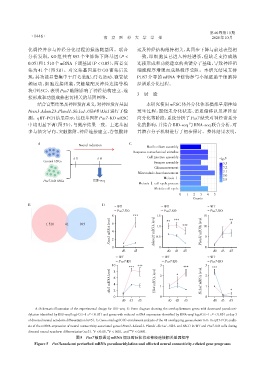
              化调控并参与神经分化过程的候选靶基因。联合                             运及神经结构维持相关,其同步下降与前述表型相
              分析发现,KO 组共有 893 个Ψ修饰下降基因(P <                      一致,即细胞虽已进入神经谱系,但缺乏支持成熟
              0.05)和1 510个mRNA下调基因(P < 0.05),两者交                连接形成和功能建立的关键分子基础,导致神经祖
              集为 41 个(图 5B)。对交集基因进行 GO 富集后发                     细胞程序增强而成熟程序受阻。本研究结果支持
              现,其功能显著集中于纤毛装配、纤毛运动、微管依                           PUS7 介导的 mRNA Ψ修饰参与小鼠胚胎干细胞神
              赖运动、细胞连接组装、突触装配及神经连接等模                            经谱系分化过程。
              块(图 5C),表明 Pus7 敲除影响了神经结构建立、连
                                                                3  讨 论
              接形成和功能成熟密切相关的基因网络。
                  结合富集结果及神经发育意义,对神经发育基因                              本研究使用mESC体外分化体系模拟早期神经
              Nrxn3、Adam23、Plxnd1、Slc1a1、Ulk4和Ahi1进行了检          发生过程,围绕未分化状态、谱系偏移以及神经定

              测。qRT⁃PCR结果显示,这些基因在Pus7⁃KO mESC                   向分化等阶段,系统分析了Pus7缺失对神经谱系分
              中均明显下调(图5D),与测序结果一致。上述基因                          化的影响,并结合 BID⁃seq 与 RNA⁃seq 联合分析,对
              多与轴突导向、突触黏附、神经连接建立、谷氨酸转                           其潜在分子机制进行了初步探讨。整体结果表明,


                   A                                         C
                                     Neural induction
                                                                     Motile cilium assembly
                                                              Response to mechanical stimulus
                                                                     Cell junction assembly
                                   d 0        d 0                                                     -lg P
                     Control ESCs
                                                                        Synapse assembly                3.3
                                                                        Cilium movement                 3.2
                                                                                                        3.1
                                                                 Microtubule⁃based movement
                                                                                                        3.0
                                                                             Meiosis Ⅰ                  2.9
                     Pus7⁃KO ESCs           BID⁃seq
                                                                 Meiosis Ⅰ cell cycle process
                                                                        Meiotic cell cycle
                                                                                    0  1  2  3   4  5
                                                                                          Counts
              B                                 D
                                                       WT                    WT                   WT
                                                       Pus7⁃KO               Pus7⁃KO              Pus7⁃KO
                                                     8        ***        1.5                   15
                                                    mRNA level  4       mRNA level  1.0  ***  mRNA level  10
                      1 510    41     893            6                        **  ***                      **


                                                    Nrxn3  2            Adam23  0.5           Plxnd1  5

                                                     0                    0                     0
                                                         d3    d5             d0  d3  d5           d0  d3  d5
                                                        WT                   WT                   WT
                                                        Pus7⁃KO              Pus7⁃KO              Pus7⁃KO
                                                     10         ***        3                    3
                                                            ***                       ***          ***
                                                    mRNA level  6        Ulk4 mRNA level  2  *  mRNA level  2
                                                     8


                                                    Ahi1  4 2              1                  Slc1a1  1    *
                                                     0                     0                    0
                                                         d0  d3  d5            d0  d3  d5          d0  d3  d5

                 A:Schematic illustration of the experimental design for BID⁃seq. B:Venn diagram showing the overlap between genes with decreased pseudouri⁃
              dylation identified by BID⁃seq(log2FC≤-1,P < 0.05)and genes with reduced mRNA expression identified by RNA⁃seq(log2FC≤-1,P < 0.05)at day 3
              of directed neural ectoderm differentiation(n=3). C:Gene ontology(GO)enrichment analysis of the 41 overlapping genes shown in B. D:qRT⁃PCR analy⁃
              sis of the mRNA expression of neural connectivity⁃associated genes(Nrxn3,Adam23,Plxnd1,Slc1a1,Ulk4,and Ahi1)in WT and Pus7⁃KO cells during
                                            *
                                                   **
              directed neural ectoderm differentiation(n=3). P < 0.05,P < 0.01,and  *** P < 0.001.
                                    图5   Pus7敲除通过mRNA假尿嘧啶化扰动神经连接相关基因程序
                 Figure 5  Pus7knockout perturbed mRNA pseudouridylation and affected neural connectivity⁃related gene programs

