


Page 141 - 南京医科大学自然版
P. 141
第46卷第10期                 陈奕文,张静静,张雄飞. 谷氨酰胺代谢和肿瘤耐药机制研究进展[J].
                 2026年10月                    南京医科大学学报(自然科学版),2026,46(10):1567-1583                     ·1571 ·


                肿瘤细胞中 GLUD1 表达增强,进一步生成更多的                         3.2  Gln转运体影响肿瘤代谢
                α⁃KG从而导致耐药。在低氧条件下,肺癌细胞中的                              溶质载体(solute carrier,SLC)蛋白家族是位于
                HIF⁃1α蛋白水平上调,促进了GDH的表达,GDH的                       细胞膜表面的一类小分子转运蛋白。在肿瘤细胞
                高表达增强了 Gln 代谢,增加了细胞内的α⁃KG 水                       中,SLC1A5 作为 Gln 的主要转运通道,其功能是将
                平,从而维持了细胞的能量代谢和氧化还原平衡,                            胞外Gln转运至胞内,为Gln依赖性代谢通路提供底
                有助于肺癌细胞抵抗顺铂等化疗药物的毒性,导致                            物。多项研究证实,相比正常组织,SLC1A5 在肺腺
                耐药性的产生 。                                          癌、乳腺导管癌、肝细胞癌等多种恶性肿瘤中的表
                            [27]
                    GS 作为唯一从头合成 Gln 的酶,可催化细胞内                     达水平明显升高        [29] 。这种过表达状态显著增强了
                Glu 和游离氨生成 Gln,有助于维持细胞内的 Gln 水                    肿瘤组织对 Gln 的摄取能力,支持肿瘤细胞的代谢
                平,在多种肿瘤中表达上调,与肿瘤生长、增殖、转                           重编程,提升细胞的抗氧化能力和能量供应效率。
                移密切相关。研究发现,MYC 和 STAT5 上调 GS 的                    研究发现,SLC1A5 的 2 型剪切体过表达使得 Gln 摄
                表达,催化Glu转化为Gln,导致核苷酸的产生增加,                        入量增多,增加了 Gln 代谢产生的 Glu,进而促进
                从而导致肿瘤耐药 。                                        GSH 的合成,减少吉西他滨引起的 DNA 损伤,从而
                                [28]
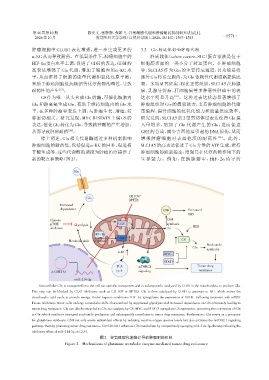
                    综上所述,Gln 相关代谢酶通过多种机制影响                        增强肿瘤细胞对吉西他滨的耐药性                    [29] 。此外,
                肿瘤细胞的耐药性,包括促进α⁃KG 的回补,促进核                         SLC1A5的高表达促进了Gln介导的ATP生成,维持
                苷酸生成等,这些代谢酶的调控为肿瘤治疗提供了                            肿瘤细胞的能量稳态,增强其在化疗药物作用下的
                新的靶点和策略(图2)。                                      生 存 能 力 。 例 如 ,在 胰 腺 癌 中 ,HIF ⁃ 2α 诱 导 的


                                   Gln


                                                            CB⁃839/
                                         Gln
                                                            BPTES
                             Increased
                             dependence
                                                                            GSH         Decreased
                                                                                        ROS
                        Glucose                                               GSH
                        mTOR       Glycolysis           GLS1                  synthesis
                        inhibitors                           Glu             Glu          NH3
                                             HIF⁃1α
                                                       GDH1
                                 Metabolic shift  Hypoxia                            GS
                                                                                                Nucleotide
                                                                                          Gln
                                                                                                synthesis
                                                       α⁃KG
                                                                             MYC
                                                                             STAT5
                                                       TCA       mTORC1                     Tumor drug
                                                       cycle     signaling                   resistance
                         cirCOL1A1
                                   miR⁃214⁃3p
                   Extracellular Gln is transported into the cell via specific transporters and is subsequently catalyzed by GLS1 in the mitochondria to produce Glu.
                This step can be blocked by GLS1 inhibitors,such as CB ⁃ 839 or BPTES. Glu is then catalyzed by GDH1 to generate α ⁃ KG,which enters the
                tricarboxylic acid cycle to provide energy. Under hypoxic conditions,HIF⁃1α upregulates the expression of GDH1. Following treatment with mTOR
                kinase inhibitors,tumor cells undergo a metabolic shift,characterized by suppressed glycolysis and increased dependence on Gln,ultimately leading to
                tumor drug resistance. Glu can also be recycled to Gln via catalysis by GS. MYC and STAT5 upregulate GS expression,promoting the conversion of Glu
                to Gln,which results in increased nucleotide production and subsequently contributes to tumor drug resistance. Furthermore,Glu serves as a precursor
                for glutathione synthesis. GSH not only exerts antioxidant effects by reducing reactive oxygen species levels but also activates the mTORC1 signaling
                pathway,thereby promoting tumor drug resistance. CircCOL1A1 enhances Gln metabolism by competitively sponging miR⁃214⁃3p,thereby relieving the
                inhibitory effect of miR⁃214⁃3p on GLS1.
                                               图2   谷氨酰胺代谢酶介导的肿瘤耐药机制
                               Figure 2 Mechanisms of glutamine metabolic enzyme⁃mediated tumor drug resistance

